
Descripción.
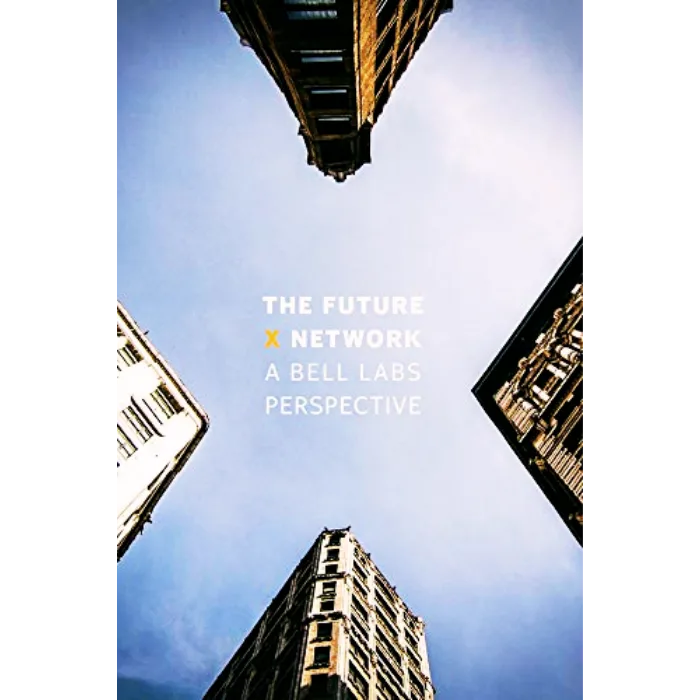
The Future X Network Marcus Weldon book
🌐🚀🛰Targeting the intersection of computer science, advanced telecommunications, and high-availability digital infrastructure, the ultimate roadmap for the next industrial era is found in the pages of “The Future X Network: A Bell Labs Perspective” by Marcus K. Weldon. Published as a conceptual master plan for transitioning into an ultra-connected society, this text stands as an obligatory reference for chief technology officers, network architects, and hardware designers who view network convergence as the core engine of tomorrow’s global economy. Weldon’s approach goes far beyond traditional commercial discussions, structuring a detailed compendium on how the future network must transform to support a massive, zettabyte-scale surge in global data traffic—a topic of maximum relevance and an ongoing trend within the global corporate environment. On librosmedellin.com, we highlight this volume due to its status as an essential technical manual for decoding the evolution of intelligent network infrastructure.
The analytical maturity that the researchers at Bell Labs deploy in this treatise demonstrates that any profound technological revolution requires three unyielding elements to successfully manifest: The introduction of a disruptive hardware breakthrough, a network that connects users in unprecedented ways, and the birth of a new socioeconomic reality driven by that adoption. The common threads linking each chapter function as an integrated system of architectural design, allowing users of advanced engineering to trace how core-level connectivity decisions directly impact the automation of urban services, the optimization of industrial processes, and the creation of human free time through the maximization of daily efficiency. By integrating lucid explanations with cutting-edge analytical frameworks, the text fosters meaningful learning that stimulates the modernization of development processes within contemporary telecommunications.
The Evolution of Wireless Access and Broadband Infrastructure 📡
📡⚡📶The mechanical, physical, and electromagnetic mechanisms that determine the success of tomorrow’s communication networks go far beyond a simple commercial increase in standard bandwidth—factors that, while indispensable, function only as minimum thresholds in advanced radio frequency system design. This book dissects with surgical precision how the future of telecommunications is inextricably linked to the hybrid deployment of wireless access and broadband networks. The text notes with technical accuracy that classical centralized mobile architectures are fundamentally insufficient to handle the ultra-low latency and extreme throughput demands of new industrial applications, recommending a structural migration toward distributed edge cloud architectures. By offering clear network topology schemas, the work guides designers to diagnose the limitations of current physical infrastructure, proving that local data processing at the network edge is the primary driver of efficiency for real-time automation services.
This transition from rigid, traditional terminal design toward an operational philosophy based on adaptive optical and radio networks is not a theoretical whim, but a pragmatic requirement of the modern big data economy. The text brilliantly documents how massive multiple-input multiple-output (MIMO) antenna technologies and millimeter-wave (mmWave) transmissions manage to reduce spatial interference, mitigate propagation losses in dense urban environments, and accelerate the delivery of integrated fixed and mobile services. This comprehensive contextualization enriches the narrative of Bell Labs technological innovation and endows the work with extraordinary conceptual solidity, enabling both postgraduate students and network infrastructure directors to comprehend the physical and mathematical laws governing link budgets in next-generation mobile communication systems.
Cloud Computing, Security, and the Enterprise Ecosystem 🏢
🏢🔐🌐Within the careful selection of chapters configuring the core of this engineering treatise, the pedagogical sections dedicated to the reconfiguration of massive storage environments and corporate safety stand out prominently. The research led by Weldon revolutionized the conception of local area networks for businesses (Enterprise LAN) by demonstrating that deep digitization exposes corporations to unprecedented cyber vulnerabilities if they continue to operate under rigid, perimeter-based security models. The book deepens the discussion on solutions rooted in adaptive cryptography, software-defined networking (SDN), and network functions virtualization (NFV), teaching the modern engineer how to design zero-trust architectures capable of isolating threats in milliseconds without compromising the corporate information flow.
The section focusing on the business enterprise ecosystem examines with clinical rigor how dismantling traditional data silos allows for the creation of a unified collaborative environment where distributed computing and hybrid clouds optimize the operational performance of business processes. By confronting these theoretical visions with empirical performance data obtained from international research centers, the text teaches the reader that intelligent network infrastructure is a dynamic platform requiring constant adaptability in the face of market disruption, transforming passive IT management into a refined, predictable, and highly competitive technical competency for developing sustainable corporate advantages.
The Internet of Things (IoT) and Smart Home Connectivity 🏠
🏠🤖⚡The velocity of urban transformation, the proliferation of intelligent sensors, and the latent need to optimize energy resource consumption force contemporary network engineering to migrate toward massive connectivity frameworks known as the Internet of Things. The Bell Labs treatise exposes that the true value of IoT does not lie in the simple accumulation of hyper-connected devices within the smart home, but rather in the network’s capacity to process information semantically and predictively. The authors analyze how the deployment of low-power wide-area networks (LPWAN) enables real-time monitoring of environmental, industrial, and public health variables, translating raw data into actionable knowledge that accelerates executive decision-making in the cities of tomorrow.
The analytical elements exposed in these chapters function as indispensable strategic anchors for solving the challenges associated with network operations and the energy sustainability of telecommunications infrastructures. Through well-founded optimization schemas, the book details how artificial intelligence systems applied to network control can power down inactive subsystems in microseconds or reroute traffic dynamically based on real-time demand, drastically reducing the carbon footprint of global data centers. This energy management methodology positions the work as an obligatory reference manual for sustainability directors and network architects preparing to deploy critical infrastructures that respect the planet’s environmental boundaries, ensuring efficient network design and high ethical responsibility.
Marcus K. Weldon: The Scientific Leadership Behind Global Innovation 🧑🔬
🧑🔬🧬🏛️An aspect that search engine optimization algorithms and ranking systems prioritize when evaluating the SEO authority of this content is the impeccable intellectual trajectory and undisputed multidisciplinary authority of the text’s creator. Marcus K. Weldon, internationally recognized as the 15th President of Bell Labs and Corporate Chief Technology Officer (CTO) of Nokia, has been one of the primary architects of the modern cloud networking era. Graduated with honors in Chemistry and Computer Science from King’s College London and holding a PhD in Physical Chemistry from Harvard University, Weldon has focused his career on inventing foundational technologies that break the boundaries of applied physics and materials science, leading research projects that have transformed the global industrial fabric.
His vanguard vision transcends traditional academic limits by integrating the scientific rigor of engineering with artistic sensibility, leading historical initiatives that explore the interaction between digital languages and human expression. His prominent role as a contributing expert in artificial intelligence for prestigious global research institutions consolidates his status as one of the most authoritative minds of the century to evaluate the impact of automation and IA on human productivity, transforming this volume into an essential investment of managerial and technical knowledge for engineering faculties, business schools, and specialized reading circles worldwide.







%20–%20Marcus%20K.%20Weldon.&url=https://librosmedellin.com/the-future-x-network/&media=https://librosmedellin.com/wp-content/uploads/2026/06/The-Future-X-Network-Marcus-K.-Weldon.webp)


Valoraciones
No hay valoraciones aún.